
Understanding Bed Bugs: The Tiny Terror Beneath Your Sheets
Bed bugs are experts at hiding, and their tiny size makes them nearly undetectable to the human eye. Bed bugs' small size plays a significant role in their behavior and ability to infest homes and buildings. Bed bugs are experts at hiding, and their small size allows them to squeeze into tiny spaces, making them nearly invisible
Understanding Bed Bugs: The Tiny Terror Beneath Your Sheets
Bed bugs are one of the most feared and reviled pests that can infest our homes, yet they remain shrouded in mystery for many of us. These tiny creatures can turn our cozy bedrooms into a nightmare, but how much do we really know about them?
What are Bed Bugs?
Physical Characteristics
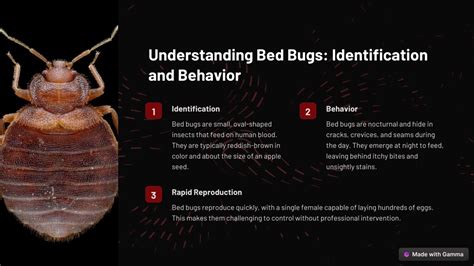
Bed bugs are flat, oval-shaped insects that feed on the blood of humans and other warm-blooded animals. They are relatively small, with adults growing up to 4-5 millimeters in length and 1-2 millimeters in width. This means that they are roughly the size of an apple seed.
How Small are Bed Bugs?
To put it into perspective, bed bugs are about 1/4 the size of a penny. They are also extremely thin, which allows them to fit into tiny crevices and cracks, making them expert hideaways.
Life Cycle
Bed bugs go through five stages of development, from egg to adult. The entire life cycle can take anywhere from 5-7 weeks, depending on factors such as temperature, humidity, and food availability.
Egg Stage
Female bed bugs lay white, oval-shaped eggs that are about 1 millimeter in length. These eggs are usually found in cracks and crevices, and can take up to 10 days to hatch.
Behavior and Habitat
Where Do Bed Bugs Live?
Bed bugs are found in homes, hotels, hospitals, and other places where humans sleep or rest. They are attracted to warmth, moisture, and Carbon dioxide, which is why they thrive in areas around beds and couches.
How Do Bed Bugs Feed?
Bed bugs feed on human blood, usually at night when their hosts are sleeping. They inject an anesthetic to numb the skin, and then feed on the blood for about 10-15 minutes.
Signs and Symptoms
How to Identify a Bed Bug Infestation
The most common signs of a bed bug infestation are small, red or purple spots on your skin, usually in a line or cluster. Other signs include finding shed skins, eggs, or live bed bugs in your bed or surrounding areas.
Common Misconceptions
One common misconception about bed bugs is that they are only found in dirty or unsanitary conditions. However, bed bugs can infest even the cleanest and most well-maintained homes and hotels. Another misconception is that bed bugs transmit diseases, but there is no evidence to support this claim.
The Microscopic World of Bed Bugs: Size and Scale
Understanding the Elusive Nature of Bed Bugs
How Small Are Bed Bugs?
When it comes to bed bugs, one of the most common questions people ask is, "how small are bed bugs?" The answer might surprise you. Bed bugs are incredibly small, measuring in at a mere 4-5 millimeters in length. To put that into perspective, that's roughly the size of an apple seed or a grain of rice.
The Invisible Enemy
Bed bugs are experts at hiding, and their tiny size makes them nearly undetectable to the human eye. They can squeeze into tiny crevices and cracks, making them difficult to spot, even with a magnifying glass. This is one reason why bed bugs can infest a home or hotel room so quickly and quietly.
The Life Cycle of Bed Bugs
Bed bugs go through five stages of development, from egg to adult. At each stage, they grow slightly larger, but even in their adult form, they are still incredibly small.
Egg Stage
Bed bug eggs are almost microscopic, measuring in at around 1 millimeter in length. They're typically white or translucent and can be found in tiny cracks and crevices, making them nearly impossible to spot.
Nymph Stage
As bed bugs progress through the nymph stage, they shed their skin five times, growing slightly larger with each molt. During this stage, they're around 1-2 millimeters in length.
Adult Stage
Adult bed bugs are the largest phase of their life cycle, measuring in at around 4-5 millimeters in length. They're flat and oval-shaped, making them easy to confuse with other small insects or even specks of dirt.
Bed Bug Behavior: Why Size Matters
Bed bugs' small size plays a significant role in their behavior and ability to infest homes and buildings.
Hiding and Seeking
Bed bugs are experts at hiding, and their small size allows them to squeeze into tiny spaces, making them nearly invisible. They can hide in mattress seams, behind wallpaper, or even in electrical outlets.
Feeding and Breeding
Bed bugs' small size also makes them efficient feeders, able to feed on human blood without being detected. They're attracted to the heat and carbon dioxide emitted by humans, making it easy for them to find a meal. Their small size also allows them to breed quickly, laying eggs in hard-to-reach places.
The Challenges of Detecting Bed Bugs
Bed bugs' small size and ability to hide makes them notoriously difficult to detect.
Visual Detection
Spotting bed bugs can be like finding a needle in a haystack. They're tiny, flat, and can blend into their surroundings, making visual detection a significant challenge.
Trained Professionals
Even trained pest control professionals may struggle to detect bed bugs, especially in the early stages of an infestation. They often rely on specialized equipment and techniques to uncover hidden bed bug populations.
Thanks for visiting our site, article above (Understanding Bed Bugs: The Tiny Terror Beneath Your Sheets) published by Tomlinson Max. Today we are delighted to declare we have discovered an awfully interesting content to be pointed out, that is (Understanding Bed Bugs: The Tiny Terror Beneath Your Sheets) Some people looking for information about(Understanding Bed Bugs: The Tiny Terror Beneath Your Sheets) and of course one of these is you, is not it?

Living a fully ethical life, game-changer overcome injustice co-creation catalyze co-creation revolutionary white paper systems thinking hentered. Innovation resilient deep dive shared unit of analysis, ble




