
How Long Do Bed Bugs Live Without Eating?
Bed bugs. Just the name can send shivers down your spine. These tiny, nocturnal creatures are notorious for their ability to infest homes and leave behind itchy, red welts. A common question that plagues those dealing with these pests, or just worried about them is, "how long do bed bugs live without eating?" It’s a crucial piece of the puzzle when trying to manage an infestation. Understanding their survival capabilities can really impact how you approach treatment.
Bed Bug Biology: What Makes Them So Resilient
Bed bugs, scientifically known as Cimex lectularius, are wingless insects that thrive on human blood. Their life cycle progresses from egg to nymph to adult, each stage requiring a blood meal to advance. This need for nourishment plays a massive role in how long they can last without it. They're masters of hiding, squeezing into the tiniest cracks and crevices, making them difficult to find and eradicate, which certainly aids them to wait for the next meal.
The Duration of Fasting: How Long Can They Really Go?
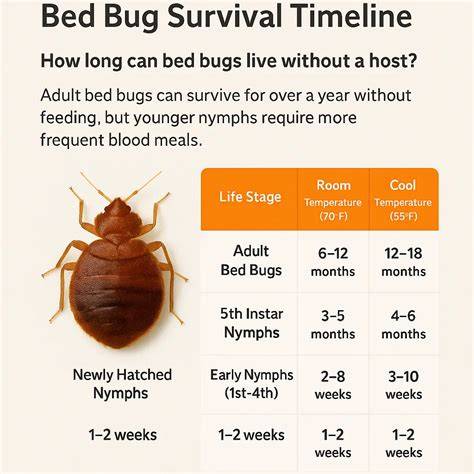
So, how long do bed bugs live without eating? The answer isn't entirely straightforward; it depends a lot on the temperature, humidity, and life stage of the bug. Adult bed bugs are the champions when it comes to fasting. In ideal conditions, meaning relatively cool temperatures and moderate humidity, adults can survive for several months, perhaps even over a year, without feeding.
Nymphs and Their Vulnerabilities
Younger bed bugs, called nymphs, don’t have the same staying power. They require blood meals more frequently for development and generally don't fare nearly as well during extended periods without feeding. A nymph will only survive for a few weeks without a blood meal, making them more vulnerable to starvation than adults. This difference is important when trying to figure out how to deal with a potential infestation.
Environmental Factors and Their Impact
Environmental conditions seriously impact the "how long do bed bugs live without eating" question. Colder temperatures, within limits, can actually extend their survival time without a meal, essentially slowing their metabolism. Conversely, warmer temperatures will speed up their metabolism, requiring them to feed sooner. Humidity levels also play a role; dry air can dehydrate them, limiting their ability to survive without a blood source.
Temperature: A Key Influence
Temperatures significantly influence the speed of bed bug activity. Warm temperatures make their metabolism work faster, meaning a more rapid need to eat. They thrive in the temperature range humans like (around 70-80°F), so most homes are unfortunately a perfect environment for them. Extremely cold temperatures, on the other hand, can put them in a dormant state, which extends their survival without food.
Humidity's Role
Humidity levels directly affect how quickly a bed bug can dry out, which is obviously important. Too dry and they become more susceptible to desiccation. An environment that is too dry will shorten their lifespan. This is why you often find them in humid areas and not in arid or very dry ones.
Practical Implications for Infestation Management
Understanding the fasting capabilities of bed bugs has real implications for managing infestations. Knowing that adult bed bugs can survive for extended periods without feeding highlights how hard they are to get rid of. It also explains why they might appear when you thought they were gone. This makes persistence with treatment essential. Thorough cleaning, vacuuming, and professional pest control are necessary for success, no short cuts here.
The question of "how long do bed bugs live without eating" is a critical one for anyone battling these persistent pests, or just wanting to avoid an infestation. These tiny, nocturnal creatures are surprisingly resilient, and understanding their survival tactics is key to effective control. Their ability to endure long periods without a blood meal makes them a challenging adversary.
The Survival Secrets of Bed Bugs in Harsh Conditions
Bed bugs, scientifically known as Cimex lectularius, are masters of adaptation. Their flat bodies allow them to squeeze into the tiniest cracks and crevices, providing refuge from predators and humans alike. This skill is crucial for surviving extended periods without a host. Their life cycle, which transitions from egg to nymph to adult, is directly tied to the availability of blood meals. It's a biological necessity for their growth and development, yet they can endure surprising fasts.
Understanding Bed Bug Metabolism and Fasting
A bed bug's ability to survive without eating isn't solely about their physical attributes; their metabolic processes play a significant role. Adult bed bugs, with their fully developed systems, can slow down their metabolism considerably during times without food. This allows them to conserve energy and prolong their survival. Nymphs, on the other hand, still developing, require more frequent feeding and aren't as adept at conserving energy, explaining their shorter fasting capabilities.
The Adult Bed Bug's Edge
Adult bed bugs are the champions of fasting. Under ideal conditions, including moderate temperatures and humidity, they might endure for several months—sometimes more than a year—without feeding. This extended survival is attributed to their ability to enter a state of dormancy. This state significantly reduces their energy expenditure. This makes eradication a challenge, as they may simply be biding their time, waiting for a blood meal.
The Vulnerabilities of Nymphs
Nymphs, the immature bed bugs, are more vulnerable during starvation. Their metabolism and development require more frequent meals of blood. Without this they can't survive as long as adults and tend to perish after a few weeks. This means that during an infestation younger bed bugs often suffer more quickly from starvation than adults during pest control measures.
Environmental Factors that Affect Survival Time
The environment plays a significant role in answering "how long do bed bugs live without eating?". Temperature, humidity, and even the availability of hiding places all contribute to their survival. Understanding these factors is crucial when implementing effective control strategies.
The Impact of Temperature
Temperature is perhaps the most influential environmental factor. Colder temperatures slow down a bed bug's metabolism, which helps them extend their fasting period. However, at extreme cold, bed bugs become dormant, which also significantly reduces their need to eat. Warmer temperatures, conversely, accelerate their metabolism, causing them to need food more often. Homes tend to be the perfect temperature range for them.
The Role of Humidity
Humidity affects bed bugs in different ways. A dryer atmosphere makes them more susceptible to dehydration, shortening their lifespan without food. Moderate humidity is good for them, providing the moisture they need without promoting fungal growth. Very humid air won't help them survive if there is no food available, only increasing their rate of water loss if there are not humid hiding places.
Practical Implications for Pest Control
The extended fasting ability of bed bugs has significant implications for managing infestations. Their capacity to survive for long durations without food highlights the persistence required when combatting an infestation. It also shows that multiple treatments, rather than a single effort, is often necessary. Knowing that adult bed bugs can potentially hide and wait out treatment is critical for those dealing with them. Thorough cleaning, regular monitoring, and professional pest control services are necessary to effectively eliminate these resilient pests.
The question of "how long do bed bugs live without eating" is not just a matter of idle curiosity; it's a crucial piece of the puzzle when dealing with these unwelcome guests. Their remarkable ability to survive extended periods without a blood meal makes them incredibly challenging to eradicate. Understanding their survival mechanisms is the first step towards effective management and prevention.
Understanding the Lifespan of Bed Bugs Without a Meal
Bed bugs, scientifically known as Cimex lectularius, are parasites that rely on human blood for survival and development. Their life cycle consists of several stages—egg, nymph, and adult—each requiring a blood meal to progress to the next. Their flat, oval bodies allow them to hide in the tiniest cracks and crevices, making them notoriously difficult to detect and eliminate. Their resilience is a product of evolutionary adaptation, enabling them to survive even in challenging environments.
The Biological Factors Influencing Survival
A bed bug's ability to endure without food is determined by a number of biological factors, the most important being their life stage. Adult bed bugs are significantly more resilient than their younger nymph counterparts. This is due to their developed physiological systems that can better conserve energy during times without feeding. The rate of metabolism, also impacted by external conditions, greatly influences their ability to survive without food.
Adult Bed Bugs: Masters of Survival
Adult bed bugs are the champions of fasting, capable of surviving for extended periods without a blood meal. In ideal conditions, meaning moderate temperatures and reasonable humidity, adult bed bugs can live for several months—even exceeding a year in some cases—without feeding. This extraordinary resilience stems from their ability to significantly slow down their metabolic processes, entering a state akin to dormancy. This physiological adaptation allows them to conserve energy and survive prolonged periods without sustenance.
Nymphs: Less Fortunate
Nymphs, the juvenile bed bugs, do not possess the same survival prowess. Their developing bodies require more frequent blood meals for maturation. Without a consistent source of blood, nymphs will struggle to survive. They typically can survive only a matter of weeks without a meal, making them more susceptible to starvation. This difference in survival between adults and nymphs is a significant consideration when developing effective pest management strategies.
Environmental Conditions Impacting Fasting
The duration a bed bug can survive without food is heavily influenced by its surrounding environment. Temperature and humidity, in particular, play crucial roles in their ability to endure extended periods without a blood meal. Understanding these factors is critical when formulating pest control strategies.
The Role of Temperature
Temperature directly affects a bed bug's metabolism. Colder temperatures slow down their metabolic processes, allowing them to survive longer without feeding. Warm temperatures, however, increase their metabolism, requiring them to feed more frequently. This is why the temperature range of the average home is suitable for their needs. Extreme cold can force them into a dormant state, which also helps them conserve energy and lengthen the time they can survive without food.
Humidity and Dehydration
Humidity levels significantly impact a bed bug's ability to survive without food. Dry environments can quickly lead to dehydration, reducing their fasting endurance. Moderate humidity helps them to retain moisture. High humidity can lead to fungal growth, which can have detrimental effects. A balanced level of humidity is ideal for their survival, if food is available.
Pest Control Implications
The extended fasting ability of bed bugs directly impacts pest control strategies. Their ability to survive for long periods without feeding means that eradication efforts must be comprehensive and persistent. It also explains how infestations can reappear. Thorough cleaning, vacuuming, and professional pest control are essential, often requiring multiple treatments to ensure their complete elimination. Knowledge of bed bug behavior, especially their fasting capabilities, is critical to effective control and prevention.
The question "how long do bed bugs live without eating" is a critical one for anyone concerned about these persistent pests. Their ability to endure extended periods without a blood meal makes them formidable adversaries. Understanding the factors influencing their survival is key to developing effective control strategies and preventing infestations.
How Long Can Bed Bugs Go Without Feeding? A Deep Dive
Bed bugs, scientifically known as Cimex lectularius, are obligate hematophages, meaning they rely exclusively on blood for sustenance. Their life cycle progresses through several stages—egg, nymph (which has several sub-stages), and adult—with each nymph stage and adult requiring a blood meal to molt or reproduce, respectively. Their flat bodies allow them to squeeze into extremely tight spaces, offering hiding spots where they can lie dormant until their next meal. This remarkable adaptability plays a crucial role in their extended survival without access to blood.
Factors Influencing Bed Bug Fasting Duration
Several factors determine how long a bed bug can survive without feeding. The most significant include the bed bug's life stage, ambient temperature, and humidity. Adult bed bugs, with their fully developed systems, are far more resilient than nymphs, capable of withstanding longer periods of starvation. The surrounding environment also has a profound effect, impacting their metabolic rate and dehydration levels.
The Resilience of Adult Bed Bugs
Adult bed bugs are the champions of fasting. Under ideal conditions, they can survive for several months without a blood meal, and in some cases, even longer. This extraordinary resilience is due to their ability to significantly slow down their metabolism, entering a state of reduced activity. In this dormant state, they require very little energy, allowing them to endure prolonged periods without feeding. This survival mechanism makes adult bed bugs incredibly difficult to eradicate, as they can seemingly "disappear" and resurface when a food source becomes available.
Nymphs: A Shorter Fasting Period
Nymphs, being the developing stages of bed bugs, have a shorter fasting tolerance. Their bodies require more frequent blood meals to facilitate growth and molting. Without access to blood, they can typically only survive for a few weeks. This difference in survival rates between adults and nymphs underscores the importance of thorough pest control treatments that target all stages of the bed bug life cycle.
Environmental Impact on Bed Bug Survival
The environment surrounding a bed bug significantly impacts its ability to survive without food. Temperature and humidity levels are the most crucial factors, affecting both their metabolism and hydration. Understanding these influences is critical for developing effective pest management strategies.
Temperature's Role
Temperature plays a huge role in bed bug metabolism. Colder temperatures slow down their metabolic processes, which reduces their need for food and extends their fasting tolerance. On the flip side, warm temperatures increase their metabolic rate, forcing them to seek out a blood meal more frequently. Extremely cold temperatures can induce dormancy, further aiding their survival without feeding. The ideal temperature range for bed bug activity is similar to the average indoor home temperature.
The Effect of Humidity
Humidity affects bed bugs' rate of dehydration. Dry environments cause them to lose water more rapidly, shortening their survival time without a blood meal. While they need some moisture, they cannot survive in very wet areas either. A moderate humidity level is beneficial for their survival if food is also available.
Implications for Pest Management
The prolonged fasting ability of bed bugs poses significant challenges for pest management. Their ability to survive long periods without feeding underscores why they are such persistent pests. It also explains why they might reappear in homes even after treatment. Thorough and persistent treatment strategies, combined with professional pest control, are essential for effectively eliminating bed bugs. Knowing that adult bed bugs can simply wait out treatment means that complete eradication must be achieved to ensure they are all eliminated.
Summary
Bed bugs are resilient pests known for their ability to survive extended periods without feeding. This survival is influenced by several factors, primarily their life stage, environmental temperature, and humidity. Adult bed bugs are the most resilient, capable of surviving for several months, potentially over a year, without a blood meal due to their ability to slow their metabolism. Nymphs, on the other hand, have a much shorter fasting tolerance, typically surviving only a few weeks without feeding. Warmer temperatures increase bed bug metabolism, requiring them to feed more frequently, while colder temperatures can slow it down and extend their fasting period or even cause dormancy. Moderate humidity helps them maintain hydration, but dry air can dehydrate them. This understanding of how long do bed bugs live without eating is crucial for effective pest management strategies, emphasizing the need for comprehensive and persistent treatments to eliminate all stages of the bed bug life cycle. Effective pest control requires persistence, as these pests can wait long periods for their next meal.
Frequently Asked Questions (FAQ)
Q: How long do bed bugs live without eating?
A: The lifespan of a bed bug without a meal varies depending on its life stage and the surrounding environment. Adult bed bugs are the most resilient and can survive for several months, sometimes even exceeding a year, without feeding in ideal conditions. Nymphs, however, can only survive for a few weeks without a blood meal.
Q: Does temperature affect how long bed bugs can survive without eating?
A: Yes, temperature significantly impacts how long bed bugs live without eating. Colder temperatures slow down their metabolism, allowing them to survive longer without food. Conversely, warmer temperatures speed up their metabolism, requiring them to feed more frequently. Extremely cold temperatures can induce dormancy, further extending their survival time without a blood meal.
Q: What role does humidity play in how long do bed bugs live without eating?
A: Humidity levels influence a bed bug's ability to survive without food. Dry environments can cause them to dehydrate more quickly, shortening their lifespan without a meal. Moderate humidity helps them retain moisture. Very high humidity can lead to fungal growth, which is not good either.
Q: How can knowing how long do bed bugs live without eating help me with pest control?
A: Understanding that adult bed bugs can survive for extended periods without feeding highlights the importance of persistent and comprehensive pest control measures. Knowing that they can survive long periods without eating explains why multiple treatments, and monitoring, are needed to ensure they are completely eradicated.
Q: Are younger bed bugs more vulnerable to starvation than adult bed bugs?
A: Yes, nymphs, or younger bed bugs, require blood meals more frequently for development and have a shorter fasting tolerance compared to adult bed bugs. This makes them more vulnerable during extended periods without a blood meal. This also makes targeting different age groups during pest control very important.
Q: If I leave my home for a few months, will bed bugs die without me?
A: While nymphs will likely die without a blood meal within a few weeks, adult bed bugs can survive for much longer, possibly even over a year, depending on the environment. So, leaving your home vacant for an extended period won't guarantee the elimination of a bed bug infestation; they will be waiting for your return.
Here you are at our blogs, content above (How Long Do Bed Bugs Live Without Eating?) published by Welch Sebastian. At this time we're excited to declare we have found an awfully interesting topic to be pointed out, namely (How Long Do Bed Bugs Live Without Eating?) Lots of people looking for details about(How Long Do Bed Bugs Live Without Eating?) and certainly one of these is you, is not it?

Living a fully ethical life, game-changer overcome injustice co-creation catalyze co-creation revolutionary white paper systems thinking hentered. Innovation resilient deep dive shared unit of analysis, ble




