
The Ultimate Guide To Bed Sizing Charts: Choosing The Perfect Fit
Now, with your room measurements and spatial layout well documented, itâs time to utilize the bed sizing chart. They provide the standard dimensions for various bed sizes, including: Compare your room's measurements with the dimensions shown on the bed sizing chart to determine which bed size fits best. By following these steps and diligently referencing a bed sizing chart, you will have a clearer idea of the ideal bed size for your specific space and needs, creating a comfortable and functional bedroom environment
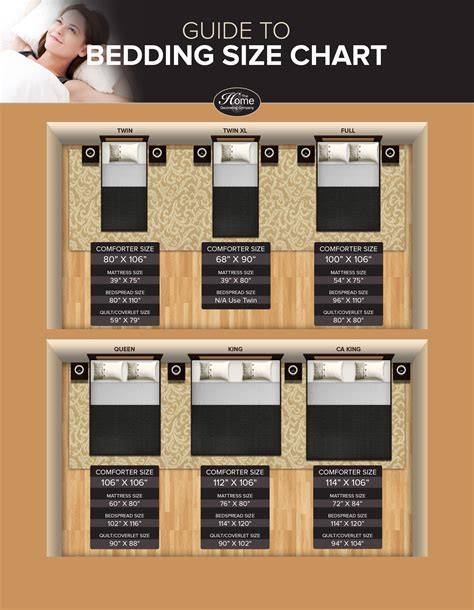
The Ultimate Guide to Bed Sizing Charts: Choosing the Perfect Fit
Let's face it, deciphering bed sizes can feel like navigating a maze. That's where the mighty bed sizing chart comes in. It's your key to unlocking the world of mattresses and frames, ensuring you get a bed that actually fits your needs and your space.
Decoding the Standard Sizes
Twin Size
A twin bed, also known as a single bed, is the smallest standard size. It's perfect for kids' rooms, smaller guest rooms, or anyone who wants to maximize space. Think of it as a personal oasis. Typically, a twin measures around 38 inches wide and 75 inches long.
Twin XL Size
If the standard twin seems a little short, the Twin XL provides that extra length. This one's a common choice for college dorm rooms and taller individuals. It shares the 38-inch width of a twin but stretches out to about 80 inches.
Full Size
The full bed, sometimes called a double bed, comfortably fits one person with plenty of space or two cozy sleepers. At approximately 54 inches wide and 75 inches long, it's a popular choice for solo adults with some extra room to sprawl.
Queen Size
The queen is a very popular size for couples. It's wide enough for two people to sleep comfortably without feeling crammed, while not taking up the entire room. A queen typically measures about 60 inches wide and 80 inches long, striking a balance between space and comfort.
King Size
For ultimate spaciousness, a king bed delivers. Think of it as two twins pushed together. With dimensions around 76 inches wide and 80 inches long, it provides plenty of space for couples to sleep without disturbing each other.
California King Size
The California King, or Cal King, is for those who prioritize length. While a bit narrower than a standard king (around 72 inches wide), it extends to around 84 inches long. This is a great option for taller sleepers.
Beyond the Basics: Considerations
Room Size
Before falling in love with a king, consider your bedroom's dimensions. You need space to move around freely, open drawers, and potentially add other furniture. Measure your room carefully, then take a look at the bed sizing chart.
Sleeping Habits
Are you a starfish sleeper who needs maximum space? Do you sleep with a partner who tosses and turns? Your sleep style influences the ideal bed size. A bed sizing chart alongside your knowledge of your sleep habits is crucial.
Future Needs
Think about where you are in life. Are you planning on having kids, or maybe downsizing in the future? Considering future possibilities while choosing a bed could save you the hassle of buying a new one later on.
Mattress Height
Don't forget to consider mattress height, as it impacts the overall bed profile. Low-profile foundations paired with thick mattresses create a substantial surface. This can impact if you need higher bed frames, which often depends on personal preferences.
Frame Compatibility
Once you've decided on a size, confirm that the frame you want will work with your mattress size. The last thing you want is an ill-fitting bed. The bed sizing chart can come in handy for framing options as well, as most will detail standard frame sizes.
Understanding Standard Bed Sizes Across Different Countries
A bed sizing chart is essential for anyone navigating the global marketplace for bedding or simply furnishing a bedroom. International standards for bed dimensions are not uniform, leading to potential confusion and mismatched purchases. This article aims to clarify the common discrepancies.
North America
In the United States and Canada, bed sizes generally follow a familiar pattern:
- Twin: Typically 38 inches wide by 75 inches long.
- Twin XL: A longer twin, usually 38 inches wide by 80 inches long, often found in college dorms.
- Double/Full: Approximately 54 inches wide by 75 inches long.
- Queen: 60 inches wide by 80 inches long. A popular choice for couples.
- King: 76 inches wide by 80 inches long. Offers ample space for two.
- California King: 72 inches wide by 84 inches long. Longer and narrower than a standard King.
Europe
European bed sizing is markedly different, with less standardization across countries:
- Single: Varies considerably, ranging from 90cm x 200cm to 100cm x 200cm (approximately 35-39 inches wide by 79 inches long).
- Double/Double bed: Also varies; generally 140cm x 200cm to 160cm x 200cm (approximately 55-63 inches wide by 79 inches long).
- King Size: European King sizes are often larger than North American Kings, with dimensions frequently at 180cm x 200cm or even 200cm x 200cm (approximately 71-79 inches wide by 79 inches long).
Asia
Asian bed sizes exhibit further diversity, often influenced by local customs and space limitations:
- Single: Sizes are generally smaller than those in Europe or North America.
- Double: Dimensions typically fall between those of a North American Full and Queen.
- Queen/King: May not adhere strictly to Western standards and often vary significantly between countries.
Australia
Australian bed sizing tends to align more closely with the UK system, exhibiting some overlaps but also possessing unique dimensions. Direct comparison with other regions requires careful cross-referencing.
The Importance of Precise Measurements
When purchasing bedding or furniture internationally or online, it is crucial to confirm the exact dimensions using a reliable bed sizing chart. Minor discrepancies in size can significantly impact comfort and fit. Paying attention to both width and length is vital to avoid disappointment.
Beyond Standard Sizes
Custom-sized beds are also available, catering to specific needs and preferences. However, this option often comes at a premium cost and requires careful planning. The use of a reliable bed sizing chart remains crucial, even in situations involving bespoke orders.
How to Measure Your Space for the Ideal Bed Size
Before diving into the specifics of a bed sizing chart, it’s crucial to understand your available space. Choosing the right bed isn't just about comfort; it's about ensuring harmonious flow and functionality within your bedroom. A bed that's too big will feel overwhelming and cramped, while one that's too small might look lost and underwhelming.
Evaluating Your Bedroom Layout
Start by carefully assessing your bedroom's dimensions. Use a measuring tape and jot down the length and width of the room. Don't forget to note the location of doors, windows, closets, and any other permanent fixtures. These elements impact how much space you actually have for a bed. Think about how the doors open—inward or outward? Consider the swing path, so you don't place the bed where it will hinder access.
Accounting for Furniture and Walkways
Next, think about the other furniture you plan to have in the room, such as nightstands, dressers, and chairs. Consider how much space you want around the bed for comfortable movement. It's recommended to have at least 24-30 inches of walkway space on all sides to allow comfortable maneuvering. Measure the dimensions of your existing furniture, if you're planning to keep it. Sketch a rough floor plan with these measurements and test different bed sizing chart options to visualize how they fit within the available space.
Considering Ceiling Height and Room Shape
While often overlooked, ceiling height and room shape can also play a role in your bed selection. Low ceilings may make tall beds appear overpowering. Likewise, awkward room shapes may necessitate a non-traditional bed placement or size. If you have an attic bedroom with slanted ceilings, pay close attention to the height limitations. Take these factors into account when referencing a bed sizing chart.
Using the Bed Sizing Chart Effectively
Now, with your room measurements and spatial layout well documented, it’s time to utilize the bed sizing chart. You can easily find these charts online, at furniture stores, or in bedding catalogs. They provide the standard dimensions for various bed sizes, including:
Standard Bed Sizes and Their Dimensions
- Twin: Typically around 38 inches wide and 75 inches long. Ideal for smaller bedrooms, kids' rooms, or single sleepers.
- Twin XL: Similar width to a twin, but longer at around 80 inches. Great for taller individuals in smaller spaces, often used in college dorms.
- Full (Double): Approximately 54 inches wide and 75 inches long. A good choice for single adults who want more sleeping space than a twin.
- Queen: Usually 60 inches wide and 80 inches long. A popular choice for couples and offers more space than a full bed.
- King: Around 76 inches wide and 80 inches long. Best for couples desiring ample personal space.
- California King: Narrower but longer than a king, approximately 72 inches wide and 84 inches long. This option suits taller people.
Matching Room Size to Bed Size Using a Bed Sizing Chart
Compare your room's measurements with the dimensions shown on the bed sizing chart to determine which bed size fits best. Remember to allow for that 24-30 inches of walkway space on all sides. For example, if you have a small room with dimensions of 10'x12', a King size bed will almost certainly overwhelm it, while a Twin might feel too small. A Queen might be the best fit.
Factoring in the Bed Frame
Keep in mind that the dimensions in a bed sizing chart typically refer to the mattress size. The actual bed frame will often be several inches larger in both width and length. Be sure to review the frame dimensions along with the bed sizing chart information. Always check the manufacturer's specifications for exact size.
Considering Personal Preferences
Ultimately, your choice of bed size should also align with your personal preferences and comfort. Do you sleep alone or with a partner? Do you toss and turn a lot in your sleep? Do you prefer to have pets sleep in the bed with you? All of these factor into finding the right bed size for you even after consulting a bed sizing chart.
By following these steps and diligently referencing a bed sizing chart, you will have a clearer idea of the ideal bed size for your specific space and needs, creating a comfortable and functional bedroom environment.
Comparing Bed Dimensions for Couples, Singles, and Families
Understanding the Need for a Bed Sizing Chart
Choosing the right bed size is crucial for a comfortable and restful sleep. A well-chosen bed impacts not just sleep quality but also the overall feel of your bedroom. Using a bed sizing chart can simplify the selection process immensely, eliminating guesswork and ensuring a perfect fit for your space and needs.
Single Beds: Perfect for Solo Sleepers
Single beds, typically 3ft wide, are ideal for individuals. They're compact, saving space in smaller bedrooms. However, they offer limited space for movement during sleep. A bed sizing chart will clearly illustrate these dimensions, highlighting their suitability for single occupants.
Double Beds: A Couple's Compromise
Double beds, at approximately 4ft 6in wide, offer more space than single beds but can feel cramped for couples, especially those who prefer ample room to move around. A bed sizing chart helps visualize this middle ground and understand its limitations compared to larger options.
Queen Beds: The Goldilocks of Bed Sizes
Queen beds, commonly 5ft wide, are a popular choice for couples. They offer a balance between space and room size, allowing couples to sleep comfortably without feeling crowded. Consulting a bed sizing chart facilitates the comparison with other sizes, accentuating this "just right" compromise.
King Beds: Sprawl Out in Luxury
King beds, measuring 6ft wide, offer the ultimate in sleeping space. Ideal for couples who appreciate ample room or those who prefer sleeping with pets, these beds provide maximum comfort and freedom of movement. A bed sizing chart easily compares the king size to smaller alternatives, clearly demonstrating the substantial increase in sleeping area.
Family Beds: Accommodating Everyone Comfortably
Family beds, often super king size or even custom-made, cater to families with young children. These are significantly wider than king-size beds, creating a comfortable sleeping area for multiple people. A bed sizing chart can be expanded to include these larger, non-standard options, providing valuable insights for larger families.
Choosing the Right Mattress: Beyond the Frame
While the bed frame size is important, it’s equally crucial to consider the mattress dimensions. Mattress sizes generally align with frame sizes, but slight variations can occur. Always check both frame and mattress dimensions when using a bed sizing chart.
Using a Bed Sizing Chart Effectively
A comprehensive bed sizing chart should include not only width and length but also information on headboards and footboards. It’s invaluable to measure your bedroom space before consulting a chart to ensure the chosen bed fits comfortably within the room. Pay attention to the total footprint, including any extra space needed for bedside tables and movement.
Beyond the Numbers: Consider Your Lifestyle
Ultimately, the "best" bed size depends on individual needs and preferences. Consider your sleeping style, whether you share your bed with a partner or pets, and the available space in your bedroom. A bed sizing chart provides the objective measurements; personal comfort dictates the final choice.
Thanks for visiting our site, article above (The Ultimate Guide To Bed Sizing Charts: Choosing The Perfect Fit) published by McCarthy Leon. Today we're pleased to declare that we have found an awfully interesting topic to be pointed out, namely (The Ultimate Guide To Bed Sizing Charts: Choosing The Perfect Fit) Some people trying to find information about(The Ultimate Guide To Bed Sizing Charts: Choosing The Perfect Fit) and definitely one of them is you, is not it?

Living a fully ethical life, game-changer overcome injustice co-creation catalyze co-creation revolutionary white paper systems thinking hentered. Innovation resilient deep dive shared unit of analysis, ble




