
Understanding Bed Bug Bites: A Visual Guide To Identifying And Treating Bites
Mosquito bites tend to be more sporadic, while flea bites often cluster near ankles. Distinguishing bed bug bites from other insect bites can be challenging, especially when symptoms overlap. They differ from mosquito bites, which are more random, and flea bites, which often concentrate around the ankles
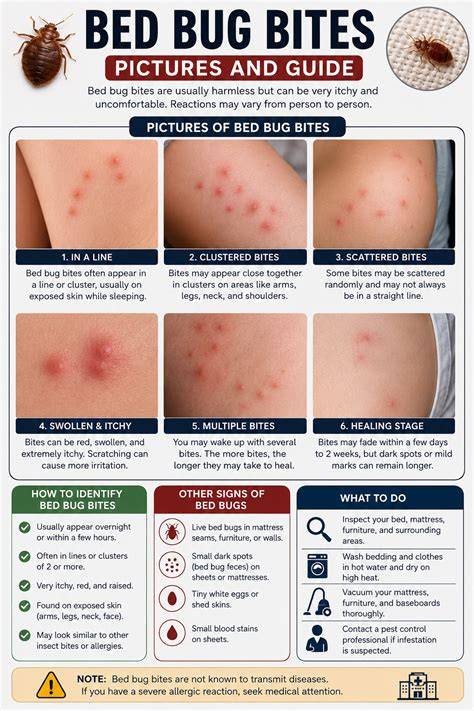
What Do Bed Bug Bites Look Like? Key Visual Indicators
Recognizing bed bug bites can be tricky, especially since they often resemble other common skin irritations. These tiny, itchy spots typically appear in clusters or lines on exposed skin, such as the arms, legs, neck, or face. The redness and swelling vary, depending on individual reactions, making it essential to know what to look for.
Common Characteristics of Bed Bug Bites
Bed bug bites usually have a few defining features. They’re small, raised bumps with a reddish hue, sometimes surrounded by a lighter halo. In some cases, the bites develop into welts or blisters, which can become inflamed if scratched. A distinguishing trait is their tendency to form in straight or zigzag patterns, a result of multiple bites during a single feeding.
Differences Between Bed Bug Bites and Other Skin Reactions
At first glance, it’s easy to mistake bed bug bites for mosquito bites, flea bites, or even a rash. Mosquito bites tend to be more sporadic, while flea bites often cluster near ankles. Allergic rashes lack the organized patterns that bed bug bites exhibit. Focusing on location and patterns can help rule out other causes.
How Long Do Bed Bug Bites Take to Show?
Bite reactions vary from person to person. Some may notice redness and itching within minutes, while others might not react for days. This delay can make it harder to pinpoint the source of the bites. For those sensitive to bed bug saliva, the itching and swelling can be more intense and prolonged.
Visual Examples: Bed Bug Bites Images and Pictures
Understanding the appearance of these bites is easier with visuals. High-resolution images and pictures of bed bug bites show the range of reactions, from mild redness to severe inflammation. Studying these can help you quickly identify a potential infestation and take action before it worsens.
When to Seek Professional Help
Persistent or severe reactions to bites might require medical attention. Secondary infections from excessive scratching or an allergic response can escalate symptoms. If over-the-counter treatments fail to provide relief, consult a healthcare provider. A dermatologist can confirm whether the marks are from bed bugs or another cause.
Recognizing Bed Bug Bites vs. Other Insect Bites: A Comparison
Distinguishing bed bug bites from other insect bites can be challenging, especially when symptoms overlap. However, understanding the unique characteristics of each bite can help pinpoint the culprit and guide effective treatment.
Bed Bug Bites: Key Traits
Bed bug bites often appear in clusters or straight lines, typically on exposed skin areas like the arms, neck, and face. They are small, red, and slightly swollen, with intense itching being a common symptom. Unlike mosquito bites, which are more random, bed bug bites often follow a pattern, reflecting the insect's feeding behavior.
Mosquito Bites vs. Bed Bug Bites
Mosquito bites are usually isolated, appearing as round, puffy welts with a central puncture mark. They cause immediate itching and may disappear within a day or two. Bed bug bites, on the other hand, tend to linger longer and are more uniform in size. Another clue is timing—mosquito bites are more likely to occur outdoors, while bed bug bites usually happen indoors during sleep.
Flea Bites vs. Bed Bug Bites
Flea bites are tiny, red bumps that primarily appear around the ankles, feet, or lower legs. They often have a red halo around the bite site and cause intense itching. Bed bug bites, in contrast, are more evenly distributed on exposed skin and lack the concentrated pattern seen with flea bites.
Spider Bites vs. Bed Bug Bites
Spider bites are usually isolated and often more painful than itchy. In some cases, they can cause swelling, redness, or even blistering. Bed bug bites rarely cause pain upon initial contact, and their appearance is generally more uniform and less aggressive than spider bites.
Tick Bites vs. Bed Bug Bites
Tick bites are typically singular and may have a small dark spot in the center, where the tick latched on. In some cases, a red bullseye pattern develops around the bite site, signaling a potential infection like Lyme disease. Bed bug bites don’t exhibit this bullseye pattern and are more commonly found in groups.
Visual Comparison: Bed Bug Bites Images and Pictures
Clear images and side-by-side comparisons of bed bug bites and other insect bites can provide visual clarity. These pictures often highlight patterns, bite groupings, and typical skin reactions, making it easier to differentiate between them.
Final Thoughts on Identification
While identifying insect bites can sometimes be straightforward, reactions vary between individuals. Pay attention to patterns, timing, and the location of bites. If uncertainty persists or symptoms worsen, consulting a pest control professional or healthcare provider is the safest choice.
Summary
Understanding bed bug bites is essential for early identification and effective treatment. These bites typically appear as small, red, itchy welts, often arranged in clusters or lines on exposed skin. Differentiating them from other insect bites, like those from mosquitoes, fleas, or spiders, requires attention to patterns, location, and timing. Visual references, such as bed bug bites images pictures, play a key role in accurate identification. While over-the-counter treatments can relieve itching and discomfort, persistent or severe reactions may require professional medical attention. Additionally, addressing the root cause—eliminating bed bugs from your environment—is crucial to prevent further bites.
FAQ Section
Q1: What do bed bug bites look like compared to other insect bites?
A1: Bed bug bites usually appear as small, red, itchy bumps arranged in clusters or lines on exposed skin. They differ from mosquito bites, which are more random, and flea bites, which often concentrate around the ankles. Using bed bug bites images pictures can help clearly distinguish between these types of bites.
Q2: How long does it take for bed bug bites to appear?
A2: The reaction time varies. Some people notice bites immediately, while others may not see symptoms for several days. Bed bug bites images pictures often showcase these variations, helping with identification.
Q3: Are there any reliable visual references for identifying bed bug bites?
A3: Yes, high-quality bed bug bites images pictures are excellent tools for comparing bite patterns and skin reactions. These visuals highlight typical clusters, redness, and swelling associated with bed bug bites.
Q4: Can bed bug bites cause severe allergic reactions?
A4: In some cases, individuals may experience more intense reactions, including swelling, blistering, or secondary infections from scratching. If symptoms worsen, consulting a healthcare provider is recommended.
Q5: How can I prevent bed bug bites in the future?
A5: Preventing bites involves addressing the root cause—eliminating bed bugs from your living space. Regular inspections, washing bedding in hot water, and using protective mattress covers are effective preventive measures.
Q6: Is it possible to mistake bed bug bites for other skin conditions?
A6: Yes, bed bug bites can resemble hives, rashes, or bites from other insects. Referring to detailed bed bug bites images pictures can provide clarity and help avoid misdiagnosis.
Here you are at our blogs, content above (Understanding Bed Bug Bites: A Visual Guide To Identifying And Treating Bites) published by James Max. At this time we're excited to announce that we have found an incredibly interesting niche to be pointed out, namely (Understanding Bed Bug Bites: A Visual Guide To Identifying And Treating Bites) Many people attempting to find specifics of(Understanding Bed Bug Bites: A Visual Guide To Identifying And Treating Bites) and of course one of them is you, is not it?

Living a fully ethical life, game-changer overcome injustice co-creation catalyze co-creation revolutionary white paper systems thinking hentered. Innovation resilient deep dive shared unit of analysis, ble




